
Integration & deployment
Connect the systems you trust. Understand the business they run.
Your plant and your business do not run on one system. Your intelligence should not stop at the boundaries between them.
Illustrative integration landscape
Plant and process
PLCs · SCADA · DCS · Industrial historians · Sensors and meters
Production and quality
MES · Quality management · Laboratory information management
Enterprise and assets
ERP · Enterprise asset management · Maintenance management
Warehousing and movement
WMS · Warehouse control · Yard systems · RFID · RTLS
Customers and demand
CRM · Demand planning · Authorized market-information sources
Operational context and intelligence
What is affecting output? Which commitments are exposed? Where should we act next?
Different systems. One operating question.
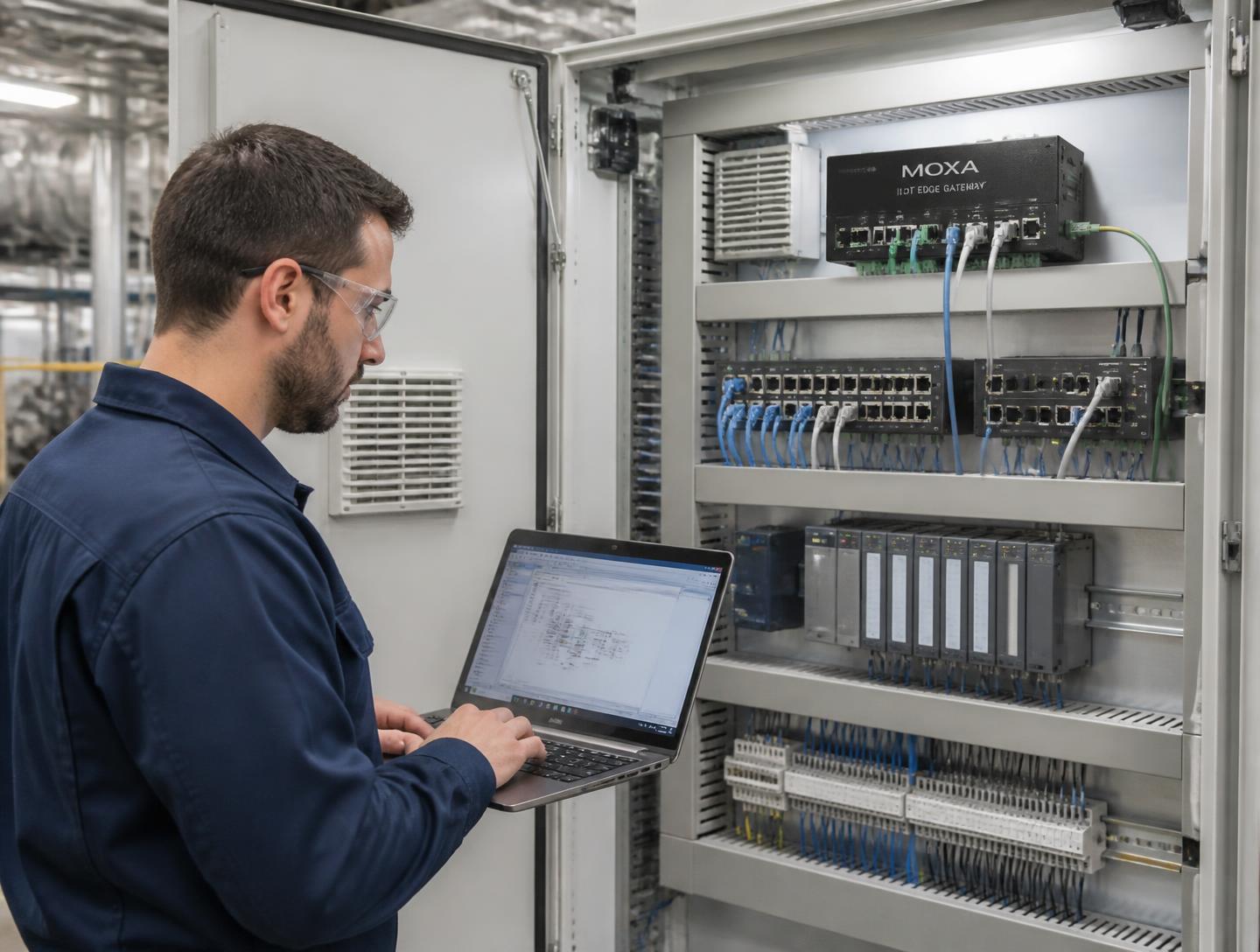
A control-room engineer and a plant IT specialist reviewing connected plant systems together.
Start with your systems.
Identify the information that matters to the decision — not just the systems that happen to be easiest to connect.
Plant and process
PLCs · SCADA · DCS · Industrial historians · Sensors and meters
Understand equipment conditions, process behavior, production signals and operating history.
Production and quality
MES · Quality management · Laboratory information management
Connect production progress, material genealogy, inspection results, quality holds and release status.
Enterprise and assets
ERP · Enterprise asset management · Maintenance management
Bring orders, materials, costs, maintenance requirements and business commitments into the picture.
Warehousing and movement
WMS · Warehouse control · Yard systems · RFID · RTLS
Relate inventory identity and physical location to movement, staging and dispatch readiness.
Customers and demand
CRM · Demand planning · Authorized market-information sources
Connect customer requirements, commercial opportunities and demand changes with planning assumptions.
These system families frame the integration discussion. Actual connection scope is confirmed for the relevant products, versions, interfaces and use case.
Connecting data is the beginning. Understanding it is the next step.
A signal, a batch record, a material movement and a customer order may describe different parts of the same situation. Their value grows when the equipment, material, timestamps and business relationships are clear.
Optimon's integration approach starts with the information needed for a defined decision, then establishes the context required to interpret it. Connection scope, model use and any workflow or write-back are agreed separately.
Connected systems. A clearer decision.
A quality hold is no longer just a quality event.
One held material can become a question for production, the warehouse, planning and the customer team. A connected view helps those teams investigate the same situation.
01
Which material is affected?
Quality and material records identify the hold and its scope.
02
What is its production history?
Process and production records provide the operating history.
03
Where is it physically located?
Warehouse and location information establish inventory and movement context.
04
Which orders depend on it?
Enterprise records relate material availability to orders and planned requirements.
05
Which customer commitments may need attention?
Customer and commercial records provide the context for a coordinated response.
The value is not simply bringing those records together. It is helping the responsible teams understand the situation and coordinate the next decision.
Illustrative connected-decision example. Actual workflows and available information depend on the configured use case.
Connections that fit your environment.
A useful connection brings the right information into the decision. The route may be a verified connector, an approved application interface, an existing historian, or another agreed integration method.
Review the source product, version, information required and access method with our team. Reading information, recommending a response and executing a transaction are separately scoped activities.
Integration availability depends on the source product, version, interface access, deployment requirements and agreed use case. We confirm the connection scope before implementation.
Build on what already works.
Your existing systems retain their defined responsibilities. The goal is a more useful connection — not an unnecessary replacement program.
Where an existing historian holds the required operating history, include it in the integration design. Begin with the systems relevant to the first decision, then expand the scope with a clear purpose.
Fit the deployment to the operation.
Agree where information is accessed, processed and retained. Review connectivity, data location, security, access and support requirements together. Confirm the deployment pattern available for the selected use case before implementation.
Any write-back or automated workflow needs explicit design, approval and testing. The presence of a connection does not transfer operating authority to the platform.
Bring IT and OT into the same conversation.
Choice Solutions brings enterprise technology and operational integration experience to the engagement. Optimon provides the Industrial Intelligence platform. Together, the focus is a practical connection between your existing environment and the decision you want to improve.
You do not need to purchase an entire Choice infrastructure program to explore an Optimon use case. Delivery responsibilities should be explicit and appropriate to the work.
Related to this discussion.
Platform overview
How the operating picture is assembled around a decision rather than around a system.
Trust & Human Oversight
Access, authority and security questions to raise before anything connects.
Getting started
A practical sequence from naming a decision to evaluating whether the work helped.
Bring your systems. Start with a decision.
Tell us which decision you want to improve and which systems hold the relevant information. We will help define a practical starting point.
A high-level description is enough to begin. Do not send credentials, confidential datasets or plant-network access details in the initial enquiry.